Schluter®-SCHIENE
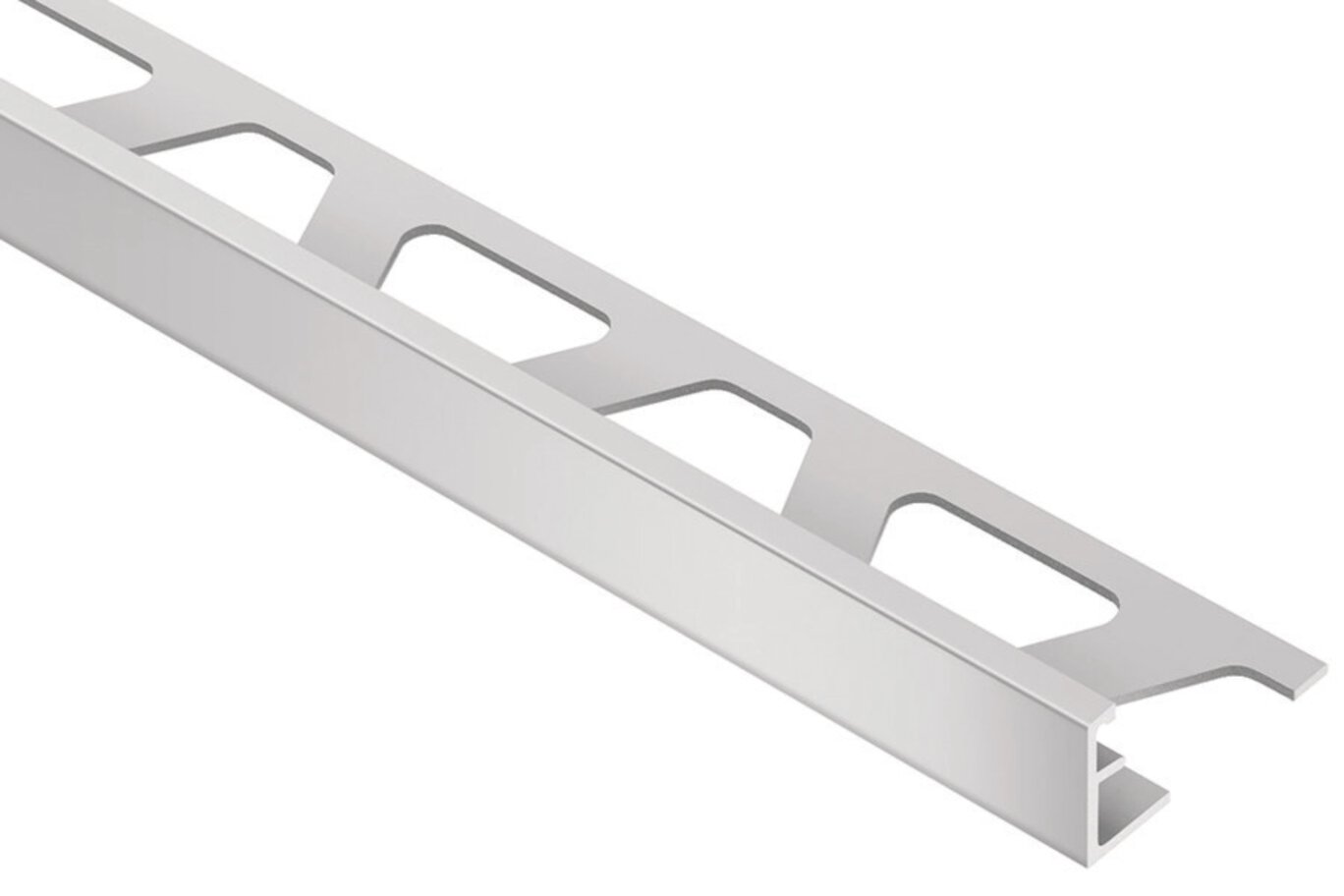
Profilé de finition et de protection des rebords à surface visible minimale

- Prévient l’effritement des carreaux
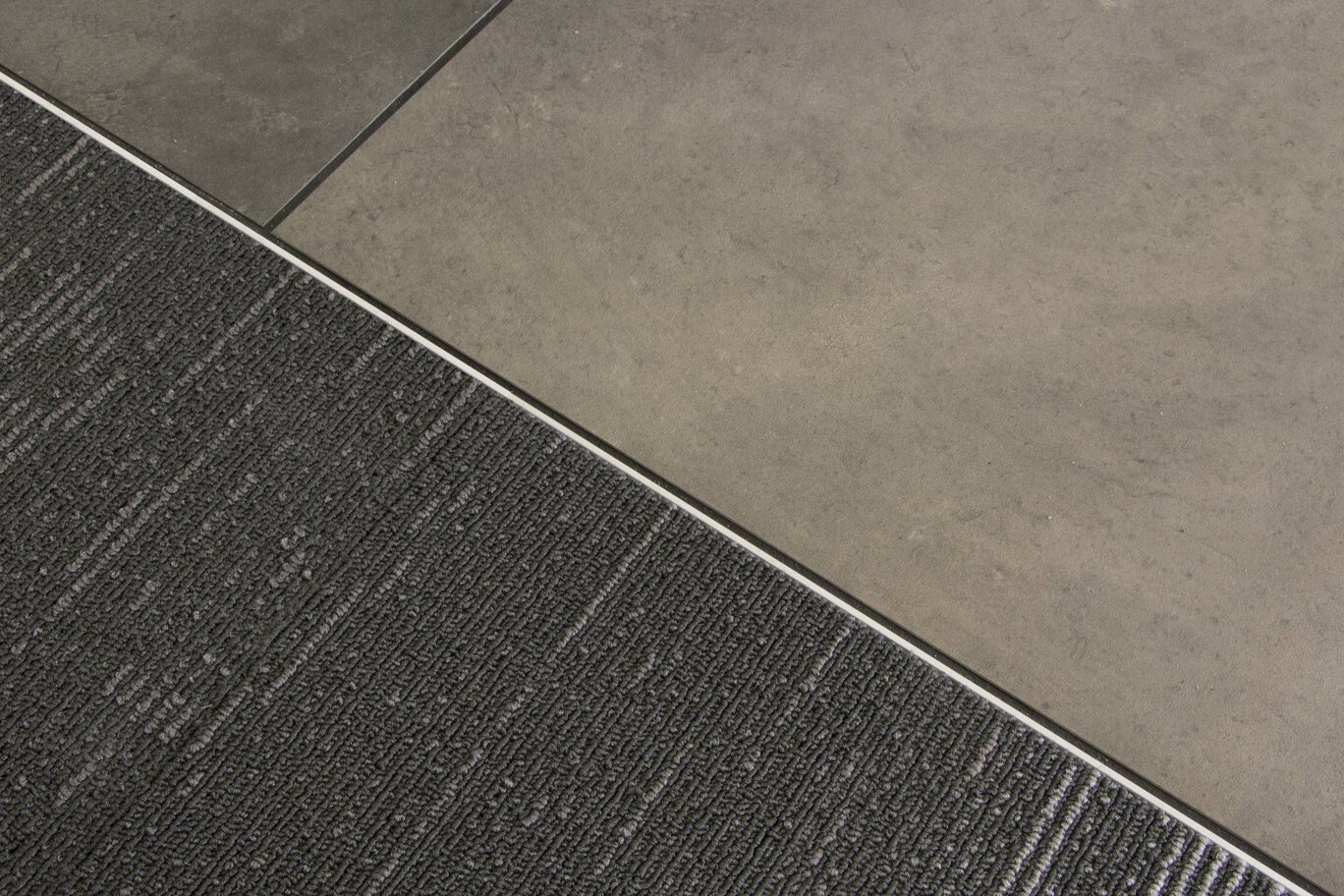
- Idéal pour la réalisation de transitions au plancher
- Présente une surface visible d’une largeur approximative de 1/8 po (3 mm), pour la réalisation de transitions discrètes
- Pente de 87° pour transmettre la charge et protéger les rebords des carreaux
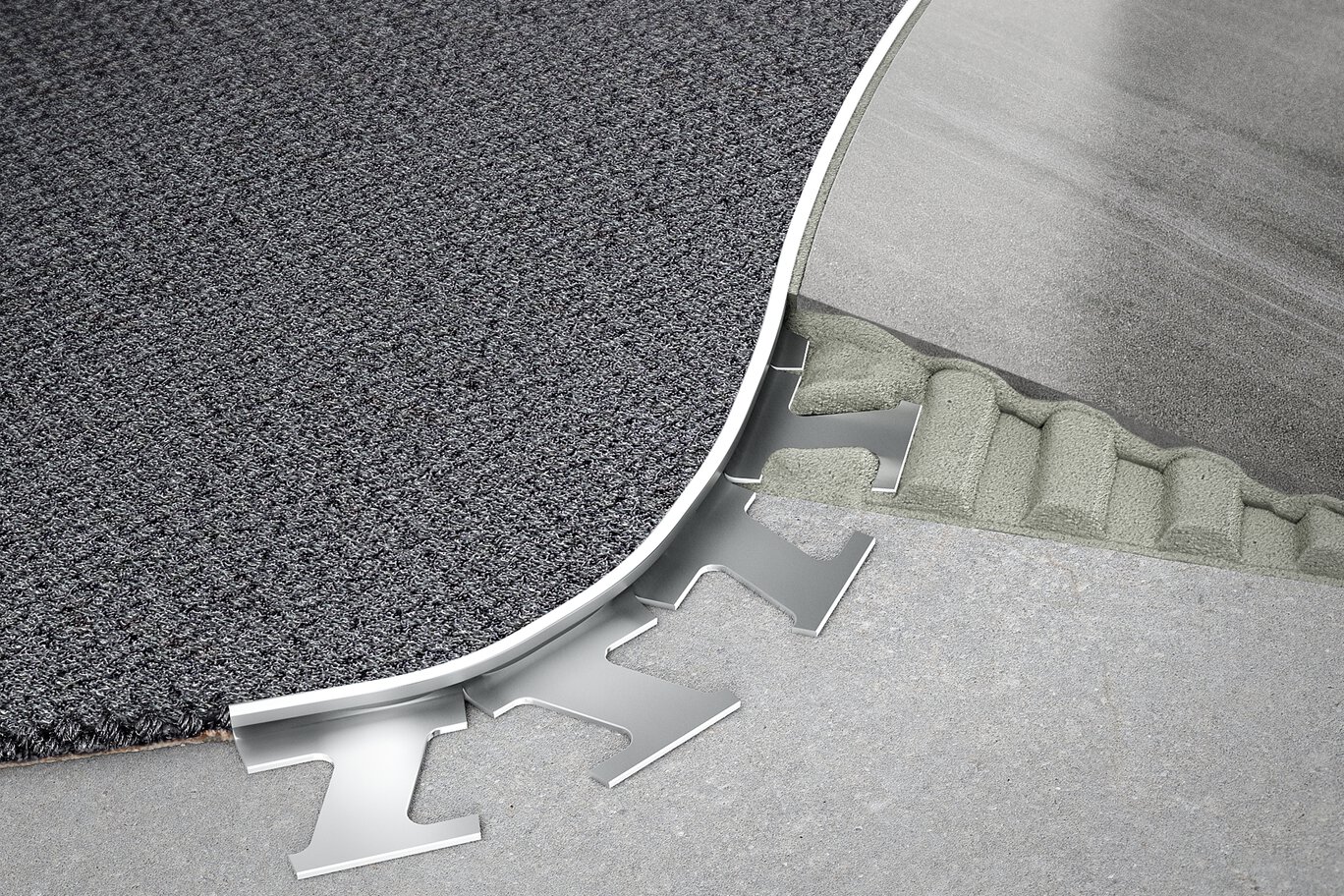
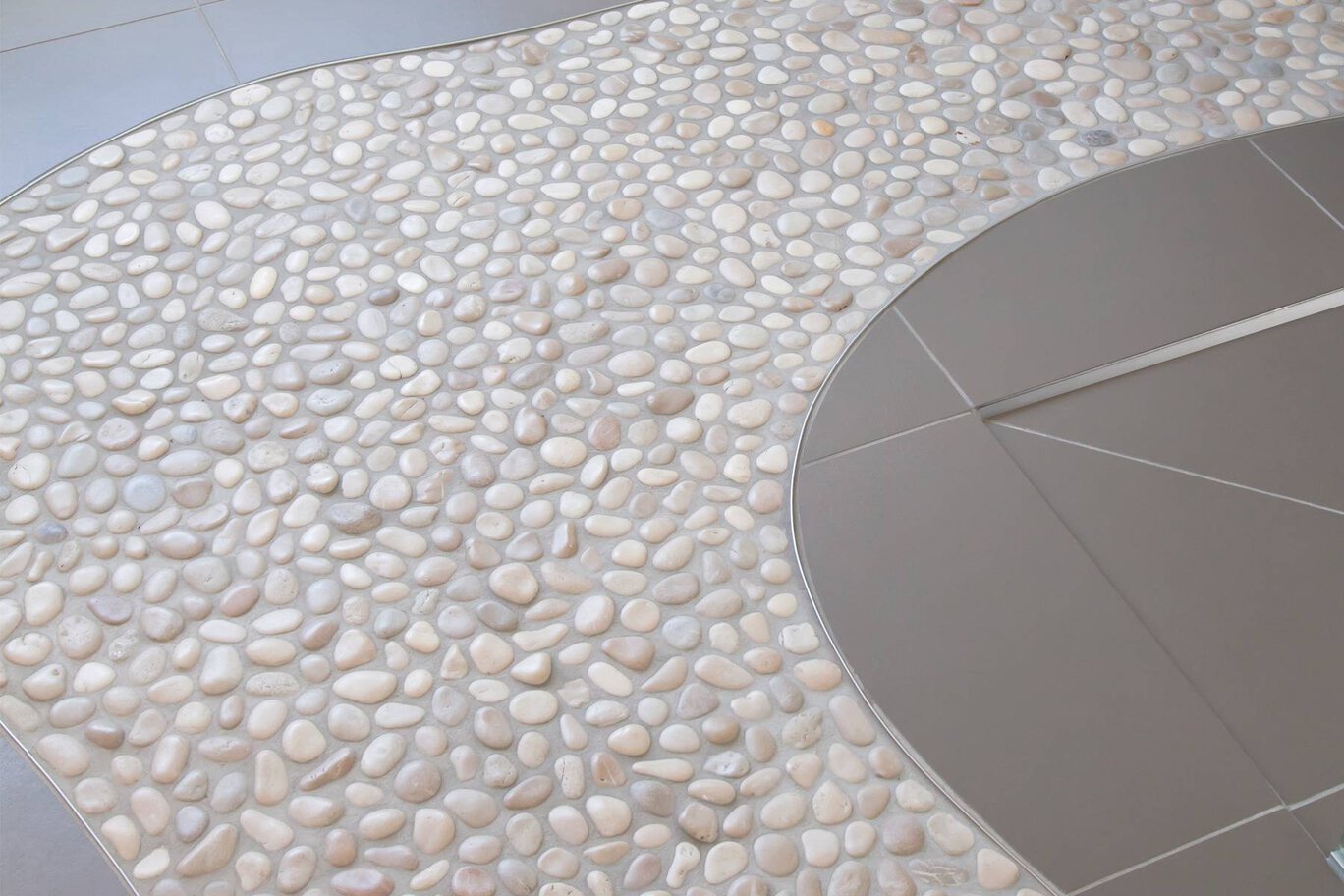
- Ailette d’ancrage à perforations courbées particulières permettant de réaliser des formes courbes
- Offert en acier inoxydable, en laiton, en aluminium, en aluminium anodisé et en aluminium coloré texturé
- Certains finis aussi proposés dans des longueurs de 10 pieds (3,05 m)
Find recommended accessories here

Estimateur de profilés
Découvrez ce dont vous avez besoin pour protéger les carreaux et faciliter les transitions.
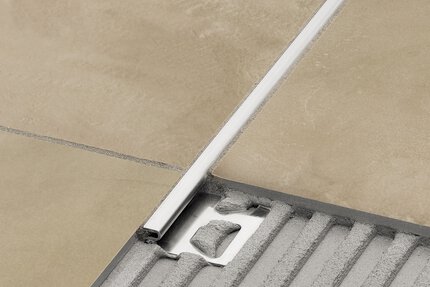
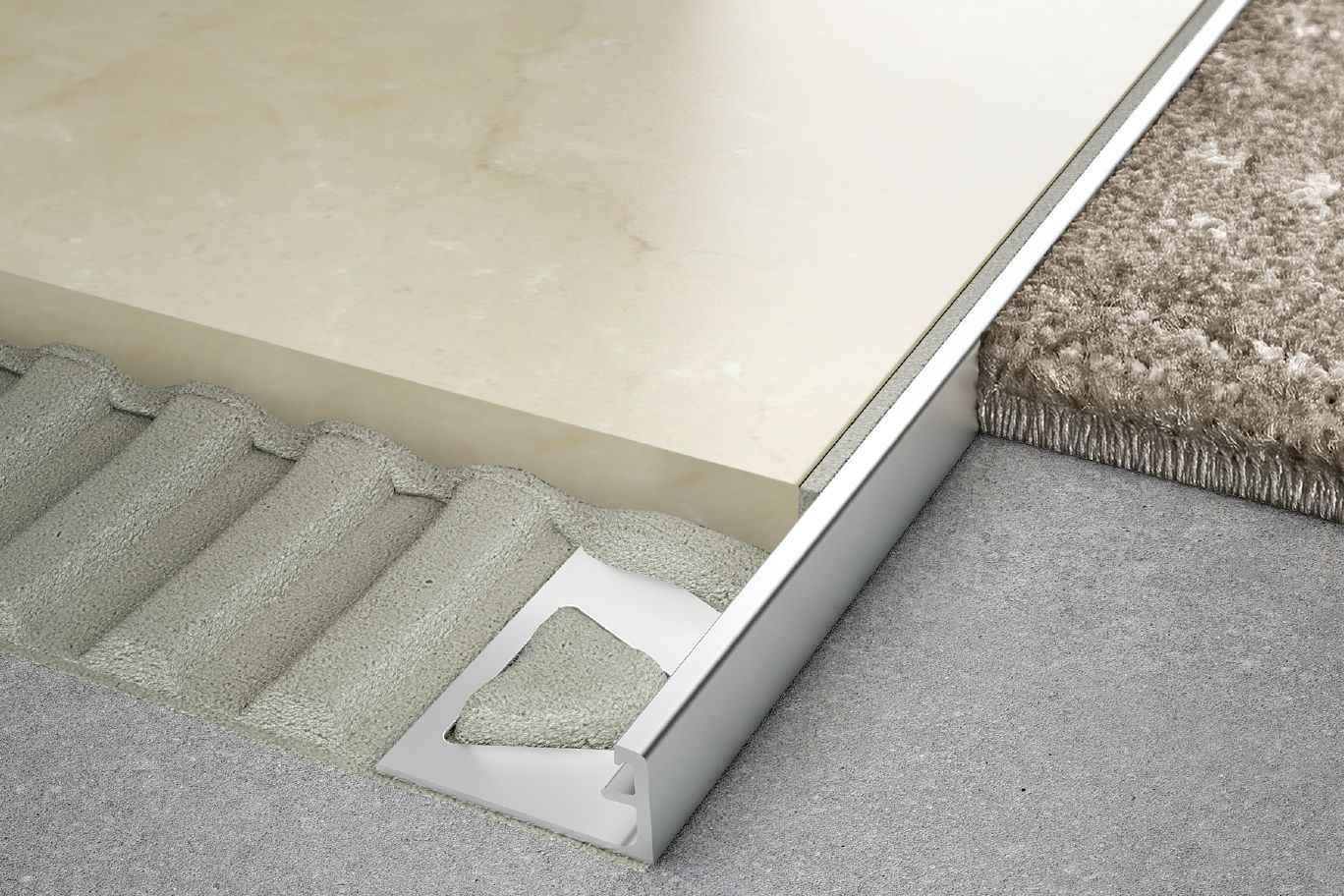
Le Schluter®-SCHIENE est un profilé conçu pour la protection et la décoration des arêtes des revêtements carrelés. On l’emploie spécialement pour protéger les rebords des carreaux qui sont bordés par du tapis, aux joints d’expansion ou comme bordure décorative pour les rebords d’escaliers.
SCHIENE est disponible en acier inoxydable, laiton, aluminium et aluminium anodisé. SCHIENE est également disponible dans des finitions en aluminium texturé coloré qui conviennent aux installations de plancher dans les applications résidentielles seulement. Le profilé est doté d’une ailette d’ancrage perforée de trous en forme trapèze qui s’enfonce dans le ciment-colle sous les carreaux. Ce profilé possède aussi une section en pente verticale de 87° qui sert à transférer les points de charge au substrat et au revêtement de surface, tout en protégeant les rebords des carreaux contre les dommages. SCHIENE en laiton, aluminium, aluminium texturé coloré, ou aluminium anodisé, comporte une section en pente de 5º sur le dessus et un filet à l’ailette verticale qui améliore la protection des rebords en réduisant le stress sur les carreaux. Le profilé possède un espaceur de coulis intégré qui contribue à créer un espace uniforme entre le carreau et le profilé pour les formats plus grands que 1/4" (6 mm).
L’ailette d’ancrage du SCHIENE est offerte, et ce dans tous les matériaux, avec une perforation particulière de radius “R” qui lui permet d'être courbé.
The Schluter®-SCHIENE profile requires no special maintenance or care and is resistant to mold and fungi. Clean profiles periodically using pH neutral cleaning agents.
Stainless steel surfaces exposed to the environment or aggressive substances should be cleaned periodically using a pH neutral cleaner. Regular cleaning maintains the neat appearance of stainless steel and reduces the risk of corrosion. Avoid the use of strong acids (e.g. hydrochloric or hydrofluoric) and base/alkaline cleaners (e.g. bleach, ammonia, chlorides). Do not use abrasive cleaning agents and tools. Stainless steel surfaces develop a sheen when treated with a chrome-polishing agent.
Oxidation films on exposed solid brass or aluminum may be removed with a common polishing agent but will form again.
In the case of anodized aluminum and textured color-coated aluminum, do not use abrasive cleaning agents.
1. Select the profile according to tile thickness and format.
2. Using a notched trowel, apply thin-set mortar to the area where the profile is to be placed.
3. Press the perforated anchoring leg of the profile into the mortar and align.
4. Trowel additional thin-set mortar over the perforated anchoring leg to ensure full coverage and support of the tile edges.
5. Solidly embed the tiles so that the tiled surface is flush with the top of the profile; the profile should not be higher than the tiled surface, but rather up to approx. 1/32" (1 mm) lower.
6. Set the tile to the integrated joint spacer, which ensures a uniform joint of 1/16" - 1/8" (1.5 - 3 mm). With the stainless steel profiles, leave a space of approximately 1/16" - 1/8" (1.5 - 3 mm).
7. Fill the joint completely with grout or setting material.
8. Remove grout or mortar residue from the visible surface of the profile.

Watch & Learn
About the product
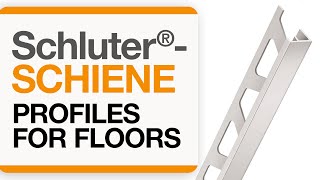
How to install a tile transition on floors: Schluter®-SCHIENE profile

Tips on How to Choose Your Profile Size in Relation to Your Tile

How to Flatten your Substrate for Schluter® Profiles
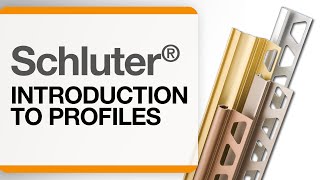
Introduction to Schluter® Profiles

Tips on Cutting Profiles
Find some existing tutorials and project documentation videos to learn how-to get the best out of our products - for more fun in your life, start now!
Watch more videos / playlists