Schluter®-SCHIENE
Profilé de finition et de protection des rebords à surface visible minimale

- Prévient l’effritement des carreaux
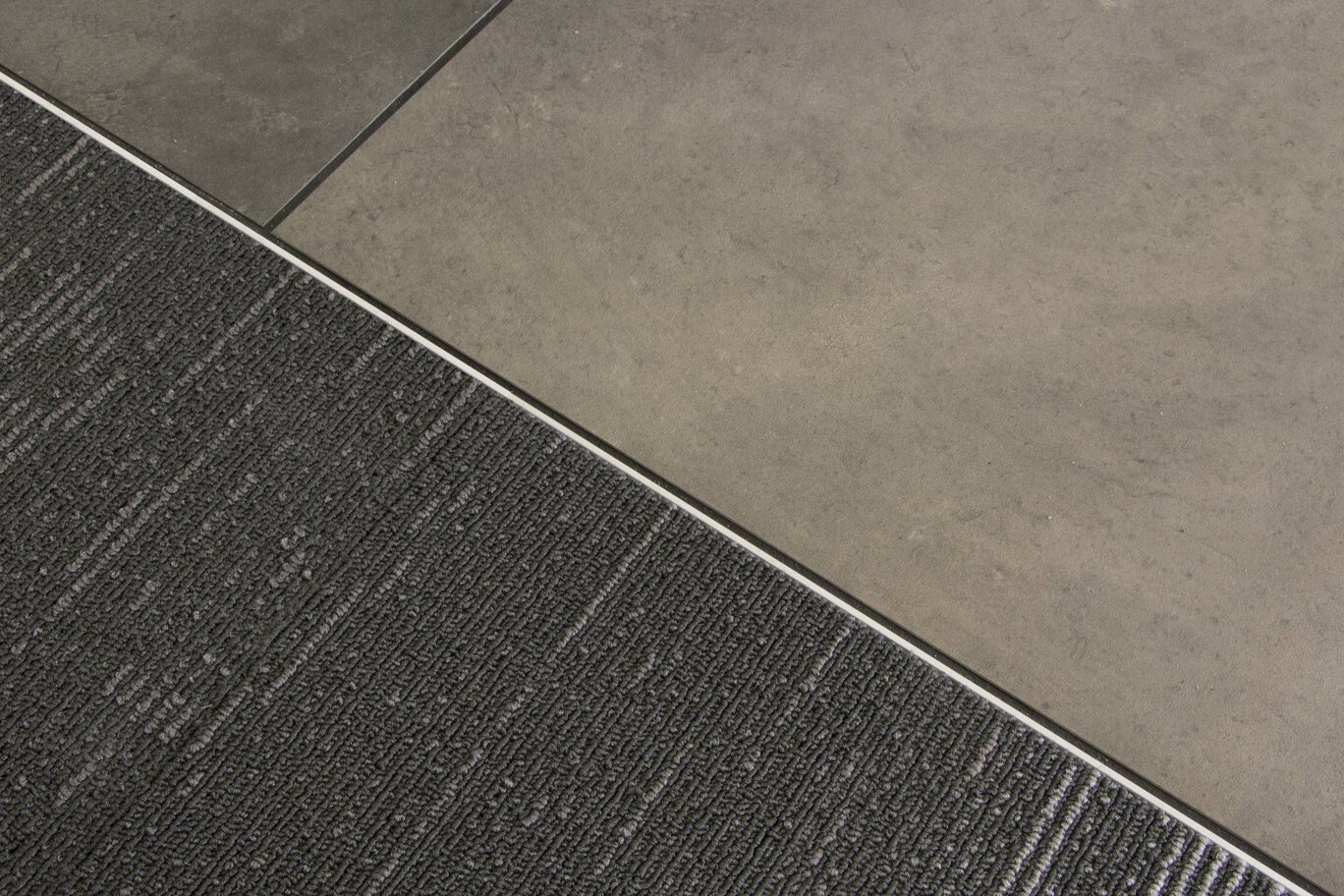
- Idéal pour la réalisation de transitions au plancher
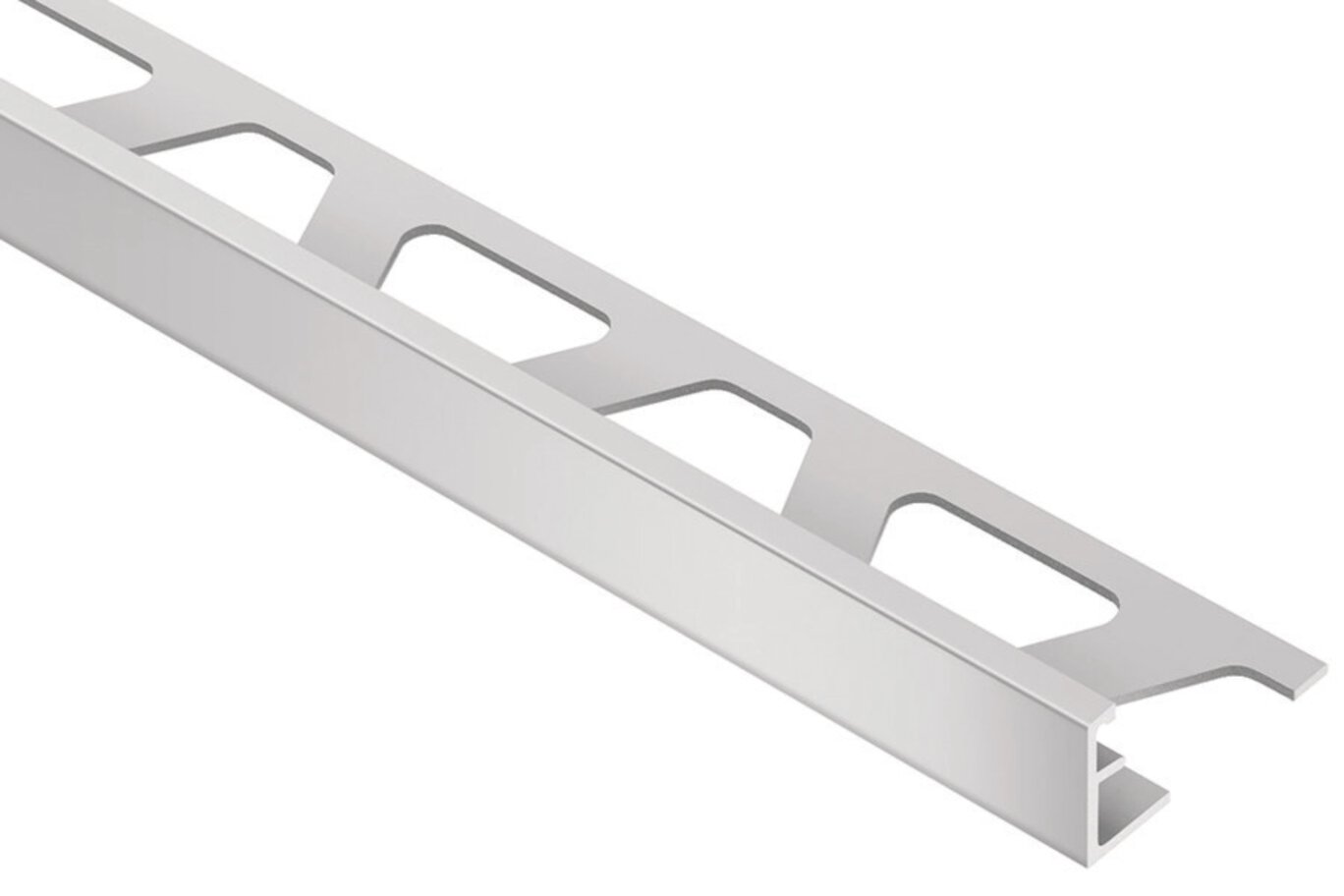
- Présente une surface visible d’une largeur approximative de 1/8 po (3 mm), pour la réalisation de transitions discrètes
- Pente de 87° pour transmettre la charge et protéger les rebords des carreaux
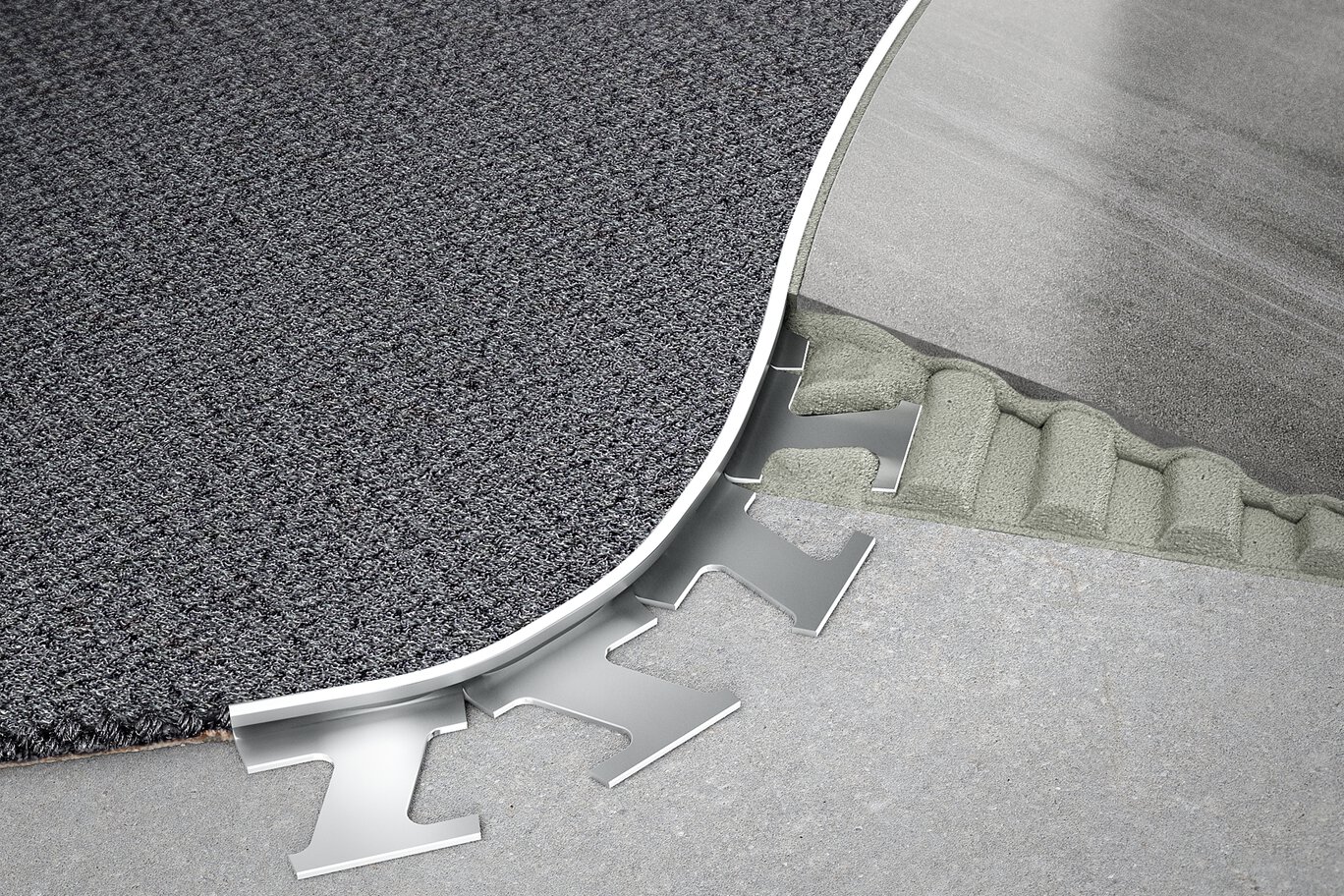
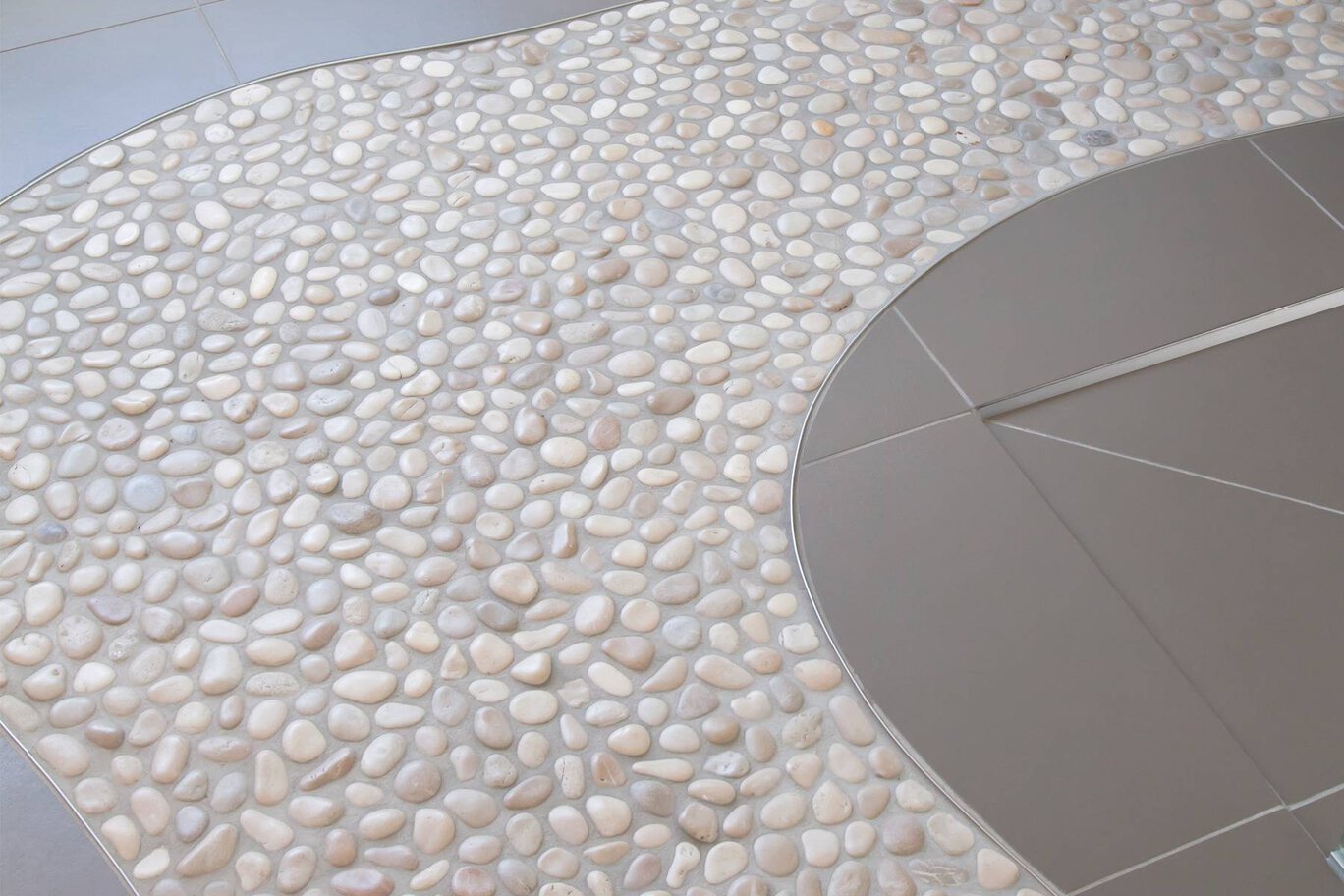
- Ailette d’ancrage à perforations courbées particulières permettant de réaliser des formes courbes
- Offert en acier inoxydable, en laiton, en aluminium, en aluminium anodisé et en aluminium coloré texturé
- Certains finis aussi proposés dans des longueurs de 10 pieds (3,05 m)
Find recommended accessories here

Estimateur de profilés
Découvrez ce dont vous avez besoin pour protéger les carreaux et faciliter les transitions.
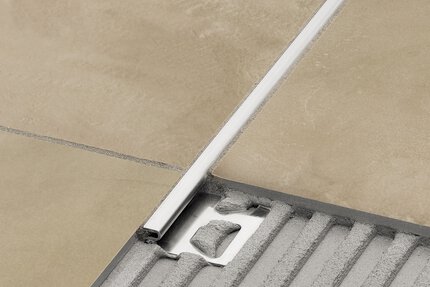
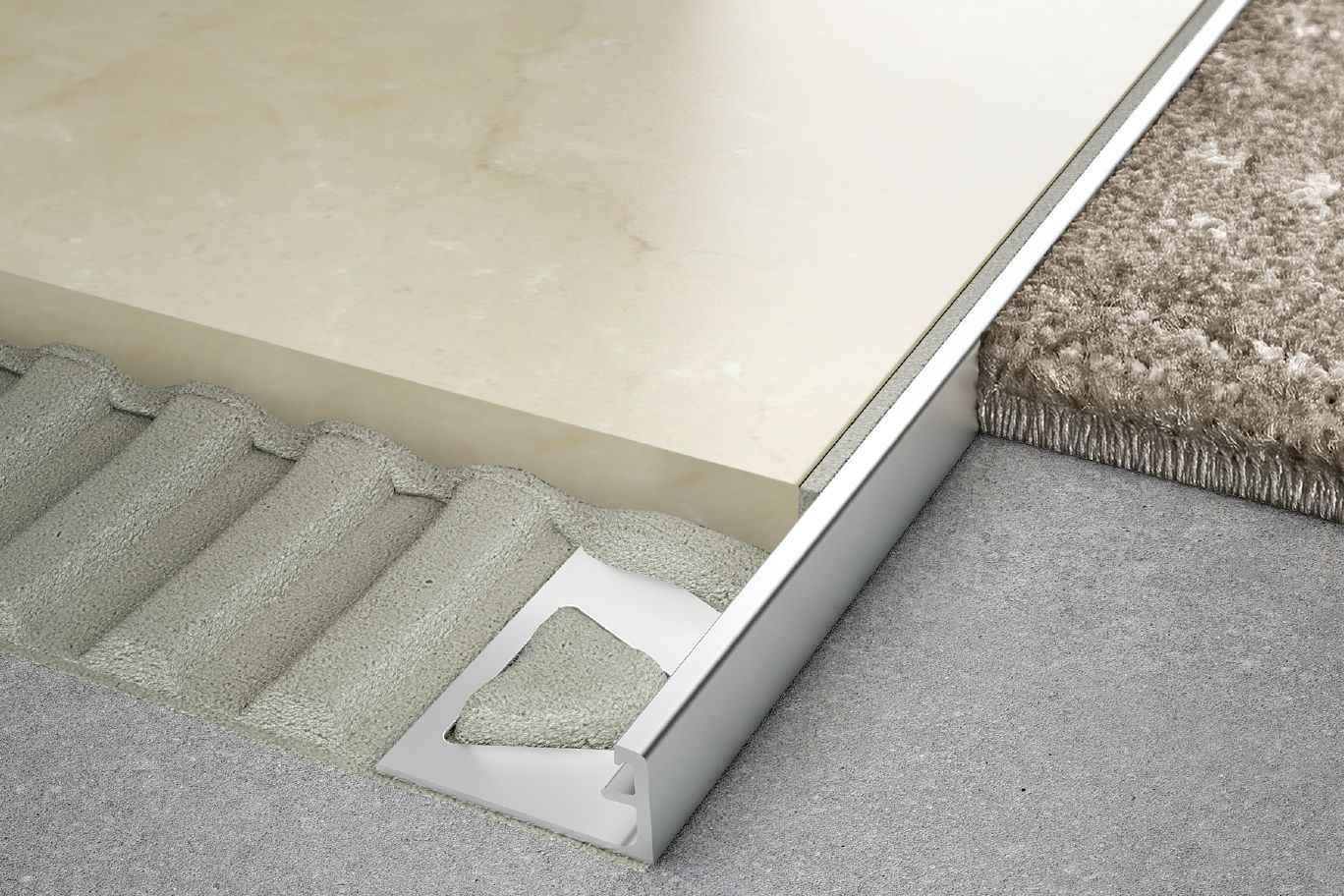
Schluter®-SCHIENE is designed to provide edging for tile coverings. Typical applications include edge protection where tile is bordered by carpet, at expansion joints, or as a decorative edging for stairs.
SCHIENE is available in stainless steel, solid brass, aluminum and anodized aluminum. SCHIENE is also available in textured color-coated aluminum finishes, which are suitable for floor installations within residential applications only. The profile features a trapezoid-perforated anchoring leg, which is secured in the mortar bond coat beneath the tile, and an 87° sloped vertical wall section that transfers point loads to the substrate and surface covering while protecting tile edges from damage. SCHIENE, in solid brass, aluminum, textured color-coated aluminum, and anodized aluminum, features a 5° sloped top flange and fillet at the anchoring leg/vertical section interface to enhance edge protection by reducing stresses on the tile, and, in sizes greater than 1/4" (6 mm), features an integrated joint spacer that establishes a defined joint cavity between the tile and the profile.
The anchoring leg of SCHIENE, in all materials, is available with a special radius perforation “R” so that the profile can be used to form curves.
The Schluter®-SCHIENE profile requires no special maintenance or care and is resistant to mold and fungi. Clean profiles periodically using pH neutral cleaning agents.
Stainless steel surfaces exposed to the environment or aggressive substances should be cleaned periodically using a pH neutral cleaner. Regular cleaning maintains the neat appearance of stainless steel and reduces the risk of corrosion. Avoid the use of strong acids (e.g. hydrochloric or hydrofluoric) and base/alkaline cleaners (e.g. bleach, ammonia, chlorides). Do not use abrasive cleaning agents and tools. Stainless steel surfaces develop a sheen when treated with a chrome-polishing agent.
Oxidation films on exposed solid brass or aluminum may be removed with a common polishing agent but will form again.
In the case of anodized aluminum and textured color-coated aluminum, do not use abrasive cleaning agents.
1. Select the profile according to tile thickness and format.
2. Using a notched trowel, apply thin-set mortar to the area where the profile is to be placed.
3. Press the perforated anchoring leg of the profile into the mortar and align.
4. Aplique con la llana una cantidad adicional de mortero de capa fina sobre el ala de fijación perforada para garantizar una cobertura total y el apoyo de los bordes de las baldosas.
5. Empotre sólidamente las baldosas de modo que la superficie revestida quede a ras con la parte superior del perfil
6. Coloque la baldosa con el separador de juntas integrado, que garantiza una junta uniforme de 1/16" - 1/8" (1,5 - 3 mm). Con los perfiles de acero inoxidable, deje un espacio de aproximadamente 1/16" - 1/8" (1,5 - 3 mm).
7. Fill the joint completely with grout or setting material.
8. Remove grout or mortar residue from the visible surface of the profile.

Watch & Learn
About the product
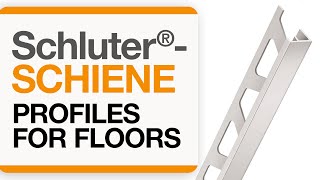
How to install a tile transition on floors: Schluter®-SCHIENE profile

Tips on How to Choose Your Profile Size in Relation to Your Tile
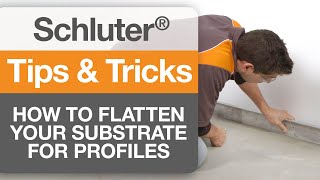
How to Flatten your Substrate for Schluter® Profiles
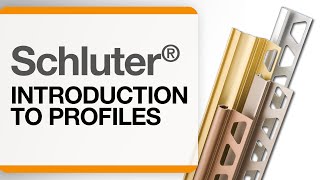
Introduction to Schluter® Profiles

Tips on Cutting Profiles
Find some existing tutorials and project documentation videos to learn how-to get the best out of our products - for more fun in your life, start now!
Watch more videos / playlists