Schluter®-DILEX-KSA
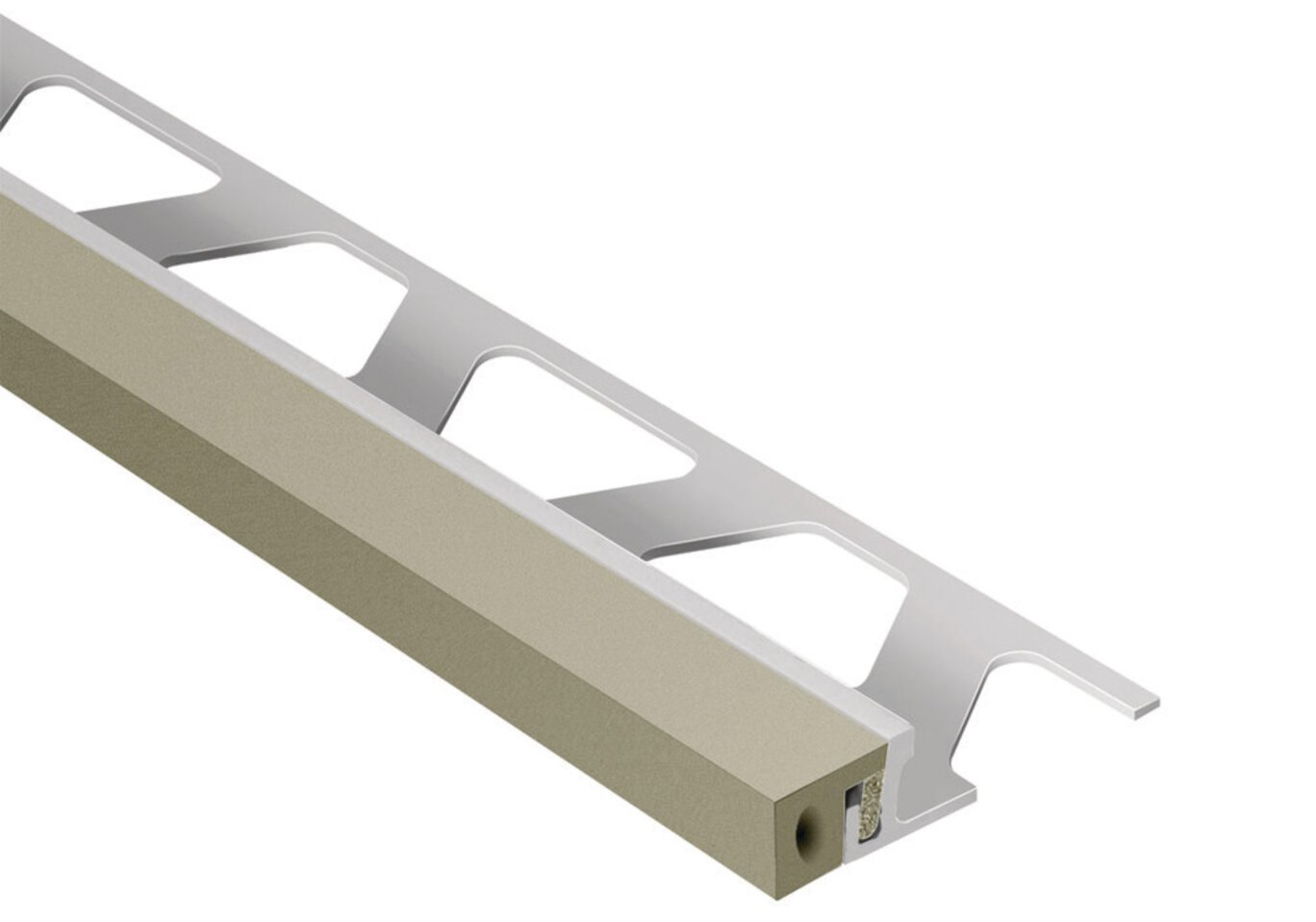
Perimeter joint profile with self-adhesive strip

- Designed to allow movement and reduce stress in large, tiled areas
- Eliminates the need for caulking
- Prevents cracking and delamination of tiles
- Ideal for applications such as window and door frames
- Features a self-adhesive strip that allows it to bond to the fixed building elements
- Available in stainless steel 316L (1.4404 = V4A); contact Customer Service for pricing and availability

Find recommended accessories here

Profile Estimator
Discover what you need for tile protection and easy transitions.
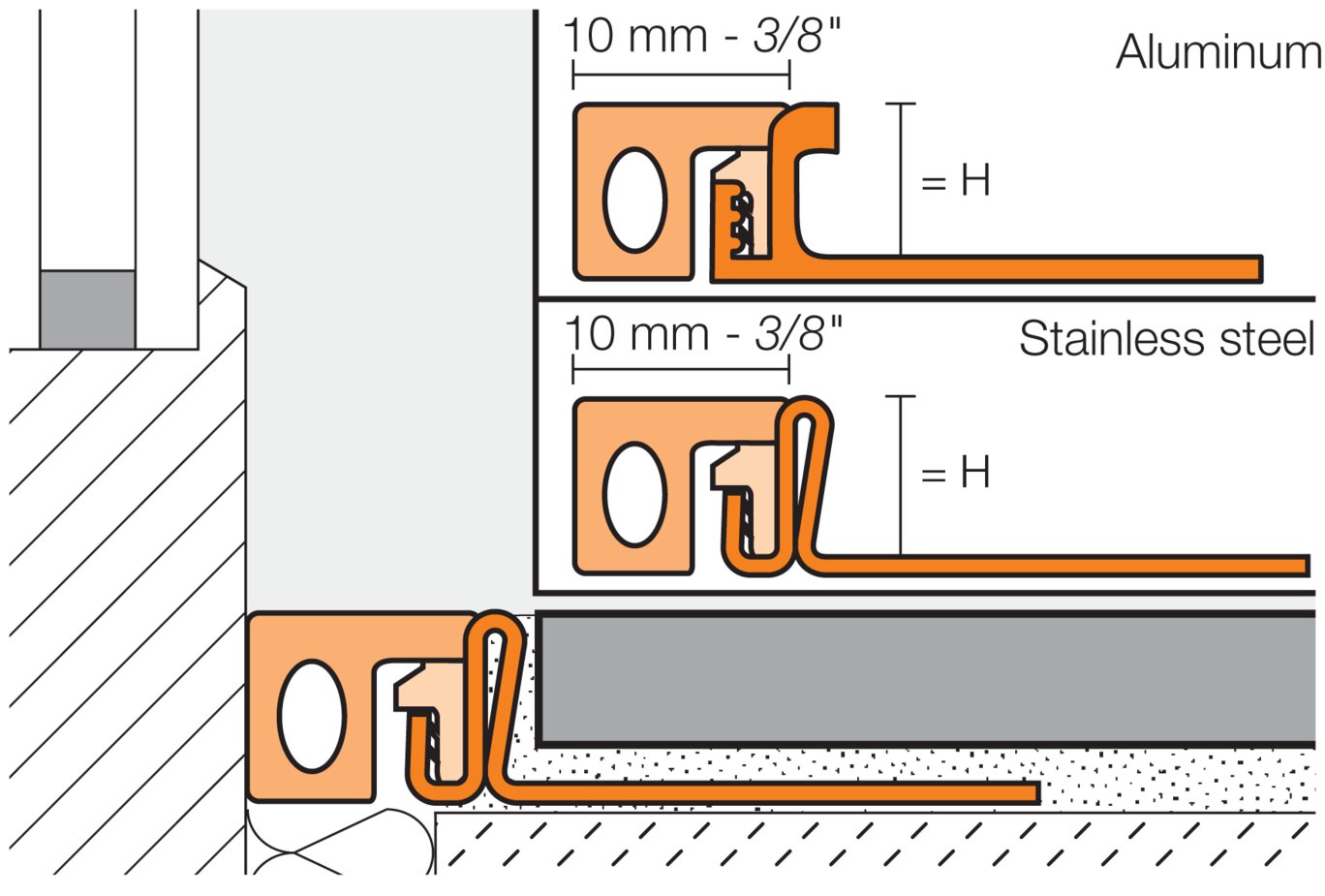
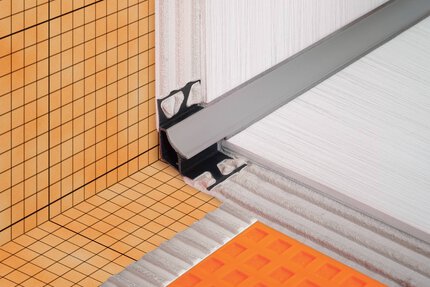
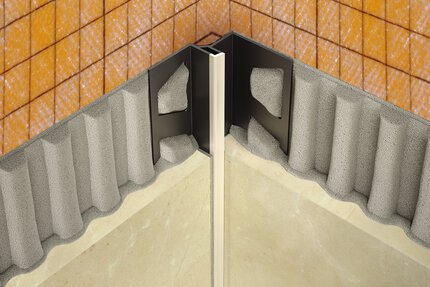
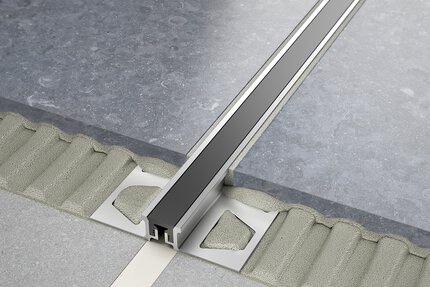
Schluter®-DILEX-KSA features a trapezoid-perforated anchoring leg, made of stainless steel or aluminum, which is secured in the mortar bond coat and provides edge protection for adjacent tiles, and a self-adhesive backing strip which can be bonded to fixed building elements (e.g., door and window frames, bathtubs and shower trays, countertops, etc.). The profile isolates the tile covering from the structure and accommodates movement via the 3/8" (10 mm)-wide, soft thermoplastic rubber movement zone, which also forms the visible surface. The thermoplastic rubber movement zone can be replaced if damaged. DILEX-KSA uses the same anchoring leg as DILEX-KSN to allow for the same appearance throughout an installation. DILEX-KSA also prevents sound bridges, making it ideal for transitions in sound-rated floors.
DILEX-KSA requires no special maintenance or care and is resistant to mold and fungi. Clean profile using common household cleaning agents. Stainless steel surfaces exposed to the environment or aggressive substances should be cleaned periodically using a mild household cleaner. Regular cleaning maintains the neat appearance of stainless steel and reduces the risk of corrosion. All cleaning agents must be free of hydrochloric acid, hydrofluoric acid, and chlorides. Stainless steel surfaces develop a sheen when treated with a chrome-polishing agent.
Oxidation films on exposed solid brass or aluminum can be removed by using a conventional polishing agent, but will form again.
The thermoplastic rubber inserts in DILEX-KSA is replaceable.
1. Sélectionnez le profilé en fonction de l’épaisseur et du format du carrelage.
2. À l’aide d’une truelle dentelée, appliquez du ciment-colle à l’endroit où le profilé sera placé.
3. Retirez la pellicule protectrice de la bande autoadhésive de DILEX-KSA.
4. Enfoncez l’ailette d’ancrage perforée du profilé dans le ciment-colle et posez soigneusement le profilé contre la structure en place.
5. Étendez encore du ciment-colle par-dessus l’ailette d’ancrage pour assurer une couverture et un support complets des rebords de carreaux.
6. Encastrez les carreaux de sorte qu’ils arrivent à l'égalité du dessus du profilé.
7. Laissez un joint d’à peu près 1/16" à 1/8" (1.5 à 3 mm) entre les carreaux et le profilé.
8. Remplissez complètement le joint de coulis ou de mortier.
Warranties
FAQ
Comment couper les profilés?
Les profilés Schluter™ sont offerts dans une variété de matériaux, c’est pourquoi la technique de coupe varie. Voici les meilleures façons de procéder selon...
Read moreCAD drawings

Watch & Learn
About the product

Comment installer le profilé de joint de mouvement : Schluter®-DILEX-KSA

Introduction aux profilés de Schluter®

Astuces pour choisir la bonne taille de profilé pour votre carrelage.

Comment couper les profilés Schluter®-Systems
Find some existing tutorials and project documentation videos to learn how-to get the best out of our products - for more fun in your life, start now!
Watch more videos / playlists

Profilés pour joints de mouvement / Joints de surface et d'expansion
Schluter®-DILEX-KSN